


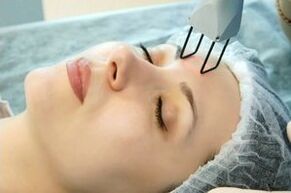
The method of laser skin rejuvenation using a fractional laser (erbium laser Er:YAG) is the newest today and is used in a wide range of procedures in cosmetology.The laser, acting on the skin, creates many microdamages in the surface layer.The cells surrounding the area of these damages receive a heat shock and begin the process of division and restore the area of microdamage (the same technique is used to remove stretch marks).After a while, the damaged area tightens and the skin softens, and all skin irregularities (wrinkles, stretch marks, small scars) disappear.This procedure creates a skin tightening effect (lifting) and shows very good results in softening the skin even after one procedure.
Effectiveness of laser skin rejuvenation
Restorative processes in the damaged area begin immediately after the procedure.Restoration of the epidermis occurs over a period of time from a few hours to a few days, depending on the diameter of the microdamages.The erbium laser forms microzones whose diameter is no more than 200 microns, even at maximum power.This minimizes the risk of complications and shortens the rehabilitation period.
The laser rejuvenation procedure itself consists of creating microscopic cylindrical holes in the skin with a laser beam.The depth and diameter depend on the power of the laser beam, which is controlled by the doctor throughout the procedure.
Skin treated with fractional laser heals quite quickly.The micro-depression heals and tightens, the new collagen fibers formed tighten the skin.Significant improvements can be seen just two weeks after the procedure.In addition, this treatment increases the skin tone, softens the skin surface, wrinkles disappear, the texture becomes more even, existing stretch marks and marks become less visible.
Types of laser resurfacing
Laser rejuvenation is a kind of collective term that is divided into several types.Each procedure has its own characteristics, good and bad.
- Fractional ablative facial rejuvenation.A common area of cosmetic manipulation.Thanks to its implementation, it is possible to get rid of small single defects.To eliminate them quickly and permanently, they must be limited - the combination of several skin imperfections in a single defect complicates the cosmetologist's task and requires a course of procedures (on average up to 5-7 sessions).Cell renewal in different areas of the face requires different speeds.In certain areas, the integrity of the tissue may be compromised, while in other parts of the face it may remain healthy.To treat only problem areas, the cosmetologist manipulates a laser with a special point of carbon dioxide.Thanks to the surface tightening of the skin, a good lifting effect is achieved.By resurfacing the skin, acne scars disappear.The disadvantage of this method is that due to skin damage, the risk of infection increases and the rehabilitation period is quite long - up to 5 days.
- Non-ablative rejuvenation.The procedure is indicated for serious skin problems - rashes, wounds and skin damage from chemicals.In this case, the entire surface of the face is covered at once.An erbium cosmetic laser is used.Laser rays do not damage the epidermis;pass through it, precisely heating the collagen deep in the skin, causing it to tighten and thicken.The advantages of this method: minimal rehabilitation period, maintaining the integrity of the epidermis negates the possibility of developing infection and inflammation.
- Laser resurfacing– this is the easiest and most gentle effect that can be performed even at home with special equipment.A sapphire and erbium laser is used.A slight tightening of the facial skin occurs, its contour is improved, fine wrinkles, crow's feet or acne are eliminated.
- Laser biorevitalizationis a new non-surgical technique that helps eliminate scars and deep wrinkles without the use of a scalpel.This is done through short-term pulses that remove the top layer of the epidermis.This stimulates cell division and renewal of the skin layer.Collagen production increases.It uses a special type of laser - low-intensity infrared, also called cold.Before laser exposure, low molecular weight hyaluronic acid is applied to the desired areas of the skin, and after the laser opens the transport channels, it enters the deep tissue layers and is evenly distributed there.Mainly because of this, this method of non-surgical rejuvenation receives many positive reviews.
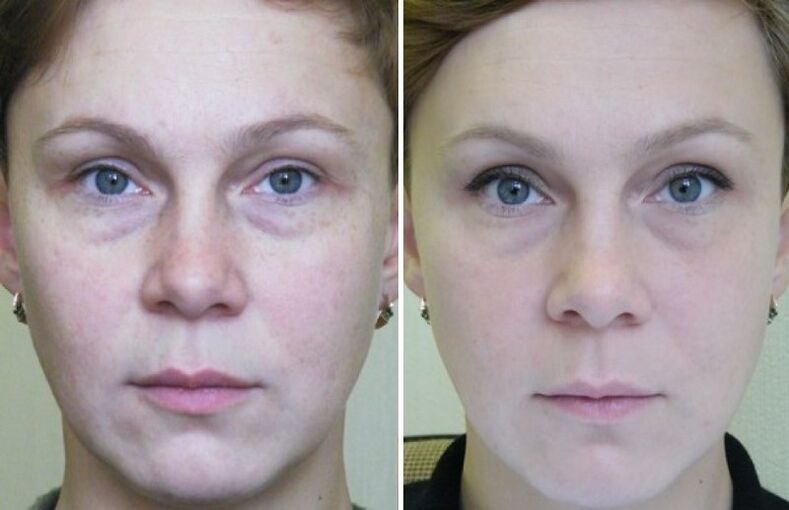
Although CO2 lasers are more aggressive than other types of lasers, they offer the most pronounced lifting and skin rejuvenation effect.The ability to work along the lines of skin tension allows you to achieve a good tightening effect even in patients over 55 years old.This is how pseudoblepharoplasty is performed today - tightening of the skin on the face around the eyes.
Contraindications
- severe forms of hypertension;
- varicose veins in the affected area;
- vitiligo;
- heart disease;
- diseases related to damage to the immune system;
- herpes;
- tendency to the appearance of keloid scars;
- psoriasis;
- connective tissue diseases;
- oncological diseases;
- pregnancy and lactation;
- systemic blood diseases;
- dermatoses
With laser exposure, there is a possibility of developing complications.These include skin rash, skin, swelling and slow healing.Negative phenomena disappear after 3-5 days.To speed up this process, special medications are used.It is useful to wipe the face with warm water at home.
Features of laser rejuvenation of the skin around the eyes.The area around the eyes is more susceptible to the formation of wrinkles, bags, crow's feet and sagging.The smallest defects in this part of the face are noticed immediately: they negatively affect the overall appearance.The skin here is thin and sensitive, so its treatment with aggressive substances and methods is strictly contraindicated.
The period after the procedure
The importance of laser facial rejuvenation is underestimated by most clients.They mistakenly believe that the final result is determined only by the skill of the doctor.But in reality, the procedure that takes place in the office of a cosmetologist requires aftercare.When done correctly, the resulting effect will last for a long time.After the procedure, the cosmetologist warns that the following is contraindicated in the near future:
- Apply water or steam to the body - visit a pool, sauna, bath;
- Expose your skin to ultraviolet radiation - sunbathe in a solarium, on the beach;
- Perform aggressive cosmetic procedures - peeling, dermabrasion;
- Take antibiotics, hormonal drugs;
- Perform actions that help speed up blood circulation and its flow to the face - massage, physical exercises.
It is advised not to be outside.Treated skin is very sensitive: environmental influences can have a detrimental effect on the condition of the skin.The use of decorative cosmetics for the first time is also contraindicated.This applies especially to the issue of using tonal products.Patients must apply special medications to the skin.It is necessary to spread the medicine on the skin until the red spots on the face are completely eliminated - such irritation is typical for the procedure in question.When the skin color returns to normal, a cream containing hyaluronic acid will help to completely restore the skin.Carrying out any compresses, especially alcohol, is strictly contraindicated!If a crust has formed at the treatment site, you should not tear or comb it.Violation of integrity increases the risk of developing a bacterial infection.
The cost
The procedure is not cheap at all, because... it involves the use of a number of devices and medications and cosmetics.